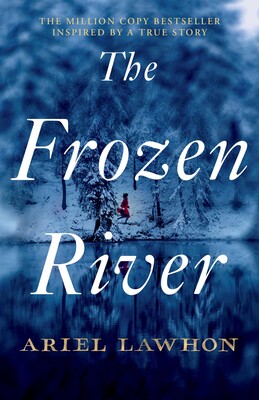
When a friend gave me Ariel Lawhon’s 2023 novel The Frozen River about a midwife in 1700s Maine, I slipped easily into the pleasurable rhythm of living other people’s experiences.
Martha Ballard was a wife and mother in her fifties. She lived in northern Maine by a river that would freeze every winter. Her life revolved around social interactions in that small village. For example, she assessed her children’s potential spouses but could only hope that they made good choices. She and her husband struggled to gain ownership of the property where he had built his sawmill. She defended a woman whose assault was not believed.
Being a midwife, she was privy to the intrigues, the dalliances, and the pregnancies in that tight community. She was also drawn into a murder investigation when a body was found under the ice in the river.
What a bracing reading experience! It took me back to my historical fiction heyday during my middle and high school years. I was hungry to learn about other places and times but kept nodding off when reading actual history books. All the while, I thrilled to library hardbacks such as Rafael Sabatini’s Caribbean swashbuckler Captain Blood, Thomas B. Costain’s Silk Road adventure The Black Rose, and Nordhoff and Hall’s South Seas epic The Mutiny on the Bounty.
I devoured North American adventure novels like Northwest Passage by Kenneth Roberts and Johnny Tremain by Esther Forbes.
Looking at this list, I notice that all the heroes are male. Were there no stories of women’s exploits? Or did I have implicit bias against my own sex and disdained stories about women? I suspect the former, but the answer is not necessarily “either/or.”
For me, the most gripping aspects of The Frozen River were the scenes of labor and childbirth. Martha narrates, “This contraction is long and crushing … and she arches [her back] against it, wailing so loudly that the air catches in her throat.”
“It ought to kill a woman, this process of having her body turned inside out. By rights, no one should survive such a thing. And yet, miraculously, they do, time and again.”
Martha makes an interesting point about being pregnant. “Pregnancy renders every woman a child. Scared. Vulnerable. Ill. Exhausted. Frail. …Her body betrays her.”
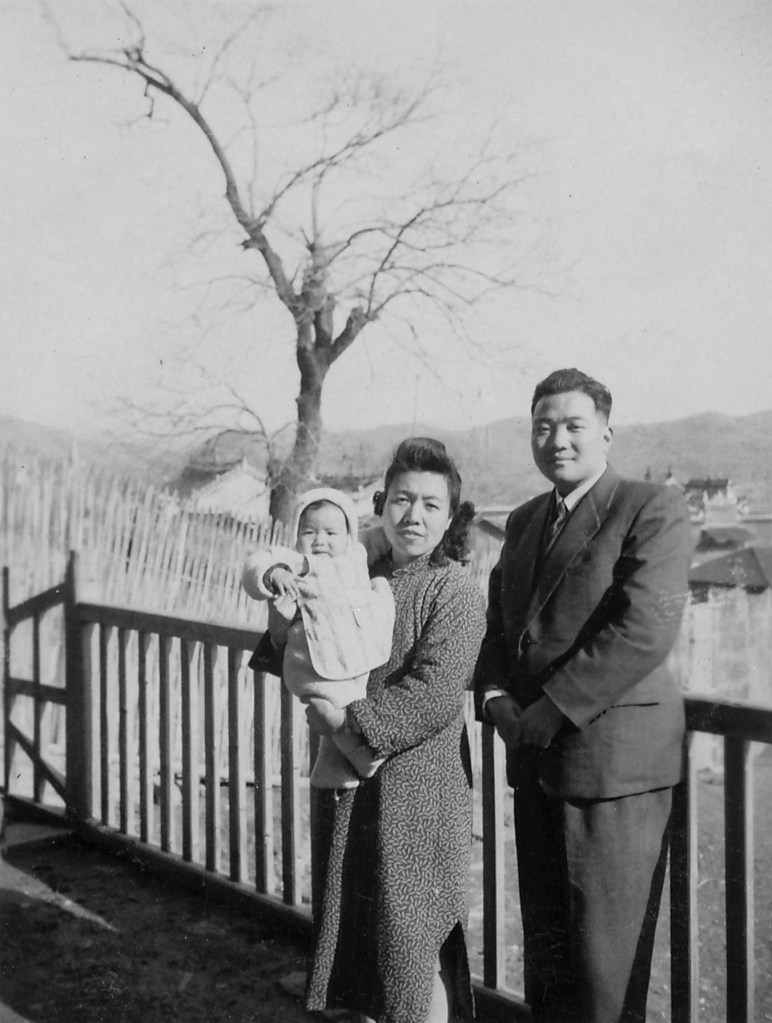
Not until I was deep into the story did it dawn on me that Martha’s experiences in delivering babies were very much like what my mom did as a young doctor in Hunan province in 1940s China. Mom walked to make home deliveries. Sometimes, she had to be rowed across the dangerous Yuan River. Houses had no central heating, electricity or running water.
She rarely talked to us kids about the medical aspects of her work. But she mentioned often her reaction to men who were upset that the baby was a girl. Mom flashed her disapproving look and said, “I ask them, wasn’t your mother a woman?”
The comparison between Mom and Martha was obvious, once I thought of it. It took a while because midwife and doctor sit in different categories in my brain. Also, Mom’s and Martha’s lives were separated by 8000 miles and 150 years. And besides, she was just my mom.
As a physician, I tried to correlate some of the illnesses Martha encountered with current medical terms: epilepsy, breech birth, and preeclampsia. But again, late in the game, I realized that I’m not just a doctor. I’m a mother!!
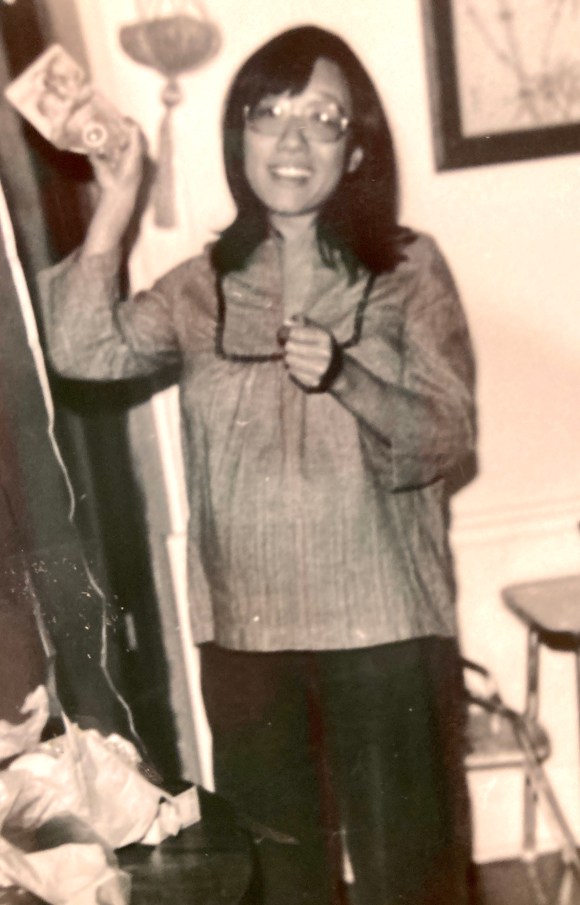
My pregnancy was miserable. I was a third-year medical student. The attending doc would be expounding at bedside. My sole focus was my nausea: to throw up or not to throw up – that was the question. My belly ballooned because it had to make room not just for a baby but also for a huge uterine fibroid. The hormones from the pregnancy caused a golf-ball-sized benign tumor to grow to football size.
I escaped experiencing labor pains. I had a C-section because Alex was breech, that is, not in the womb with his head down. I had spinal anesthesia, so I was conscious throughout. I heard the doctor mutter that the umbilical cord was coiled three times around Alex’s neck. I broke out in a sweat, realizing what a narrow escape we’d just had. If we had tried a vaginal birth, he would have been strangled by what had been his lifeline in the womb. The result would have been cerebral palsy or even death.
Once I knew that Alex was healthy, his Apgar scores attesting to normal pulse, breathing, activity, and pink color, my mind roiled with practical concerns: catching up on my medical courses, the practicalities of getting him to a sitter, eventual surgery for my fibroid. And, after seven years of marriage, Alex’s dad and I were on rocky ground.
Birthing a baby is also a roller coaster experience on the emotions. There is fear – of pain, of death, of something wrong with the baby. Either the mom or dad may be ambivalent about wanting a baby. Martha and my mom encountered many instances of the father wanting a son. Sometimes, the baby is the product of infidelity or even rape.
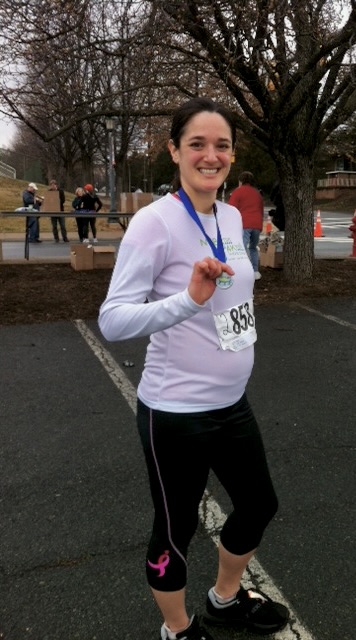
Each time a mother gives birth, it is a high stakes adventure, one that matches any journey that the men experience in the books I read as a young adult. Every chapter is replete with risk, pain, blood, and an uncertain ending.
So how come pregnancy, labor, and giving birth are treated so matter-of-factly? How come these harrowing events are so downplayed? Why doesn’t every mother get a ticker-tape parade down Main Street and the thanks of a grateful nation?
Oh, you say, childbirth is natural process. Sure, so are migraines, kidney stones, and heart attacks. Natural does not assure an easy or happy resolution.
The reason is not a mystery. It’s SEXISM. It’s the same sexism that leads to the lack of female heroes in novels. It’s the same sexism that blames Eve for the expulsion from the Garden of Eden and frames labor pains as God’s punishment. It’s the same sexism that limited the female graduates in my medical school class of 1980 to 15%. It’s the same sexism that grossly underfunds research for issues related to women’s health. I give you one example: In 2015, there were five times more scientific studies on erectile dysfunction than premenstrual syndrome.
I can understand why men, having never experienced childbirth, can so easily dismiss the suffering and the terror. It’s also implicit bias on our part as women to tone down our own achievement and struggle. “Oh, it’s no biggie,” we say, because we’ve been taught to be self-effacing.
Well, that needs to change. We must claim our due, our credit, our absolutely essential role in the world.
It’s amazing where reading historical fiction can take you. This story took me from 18th century America to 20th century China to a cri du coeur for gender equality. Can’t wait to pick up another one.
Tell me: What’s your favorite genre fiction?
*I did not use AI in making this essay. CL


One reply on “Labor and Delivery*”
Frozen River is one of my favorite books and now Cathy you have given me so many new ways to reflect on this amazing book because you, my friend, are an amazing thinker and writer. Thank you
LikeLiked by 1 person