I’ve written a lot about my early life in these blogposts. Readers know about my childhood in Shanghai, my mom’s daring escape to Hong Kong, my struggles to learn the English language and American culture. I’ve also written a ton about my current life as a happy retiree, living in the St. Louis suburbs with my husband, Bill.
I’ve skipped over much of my early adult and mid-life years. I haven’t untangled the mixed feelings I harbor about those days. The sticking point is rarely the actual events. It’s how the events reflect on me and how I feel about myself. I am haunted by thoughts that I took the easy way out.
When I went to the movies with Bill a few weeks before the 2024 elections, I didn’t expect a bubbling up of memories and feelings – and catharsis, in a way. On the other hand, it was opera. And opera sparks emotional fireworks. As novelist Garth Greenwell puts it, “The whole essence of opera is excess; the point of it, its necessary condition, is emotion too powerful for speech, emotion that has to explode in song.”
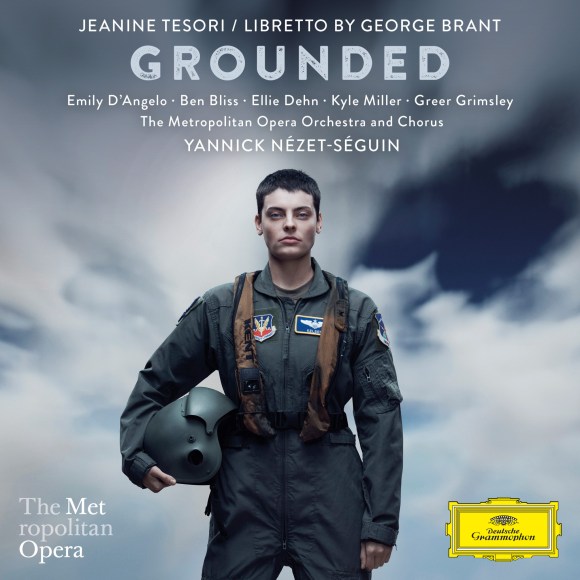
The Metropolitan Opera presented a simulcast of a new opera called Grounded. Most people are familiar with prize-fight simulcasts – watching a prize fight in real time in a theater. Opera simulcasts work the same way. And are just as exciting. The singers work without a net.

I had no idea what to expect from Grounded. I didn’t know the plot. I hoped the music wasn’t too weird. Jeanine Tesori is the composer. George Brant wrote the libretto. Mezzo-soprano Emily D’Angelo starred.
D’Angelo sings the part of Jess, a female US Air Force fighter pilot. The first scene shows Jess flanked by a phalanx of other fighter pilots. They are in combat in Afghanistan. Even though it’s hard to tell their gender because of the helmets and flight suits, the singing voices are male. Later, back Stateside, she is in a bar full of pilots, again, the only woman.
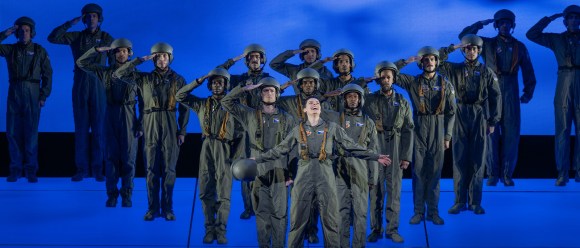
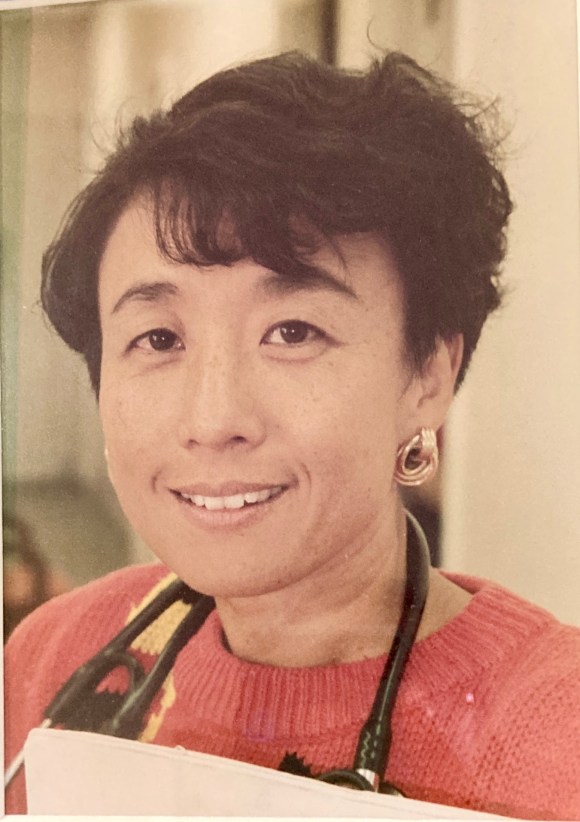
Immediately, I got the unease that I associate with a room awash in testosterone, situations that marked my medical school, residency, and practice experiences in the ‘80s and ‘90s. I am still easily triggered. Saturday mornings at the golf course where men have staked out permanent tee times, replete with pungent whiffs of cigar smoke. Or getting my car serviced at the dealership.
But that is my reaction. Jess doesn’t pay much attention to the men around her. She loves her job. She revels in her skill. She sings, “I Am the Blue,” about her oneness with her plane in the sky.
In that bar, Jess meets a Wyoming cowboy, Eric, (sung by tenor Ben Bliss) and they hit it off. Back in Afghanistan, she finds out she is pregnant. Her commanding officer tells her that he can help her get rid of the baby. When she refuses, he accuses her of wasting taxpayers’ money.
We see her, duffle slung across her shoulder, ringing Eric’s cabin door. Her back is toward us. When she turns, the shock of her protuberant belly sends a wave of emotion over me.
I became pregnant my junior year of med school. It was not planned. I was the only pregnant person in my class, in my school, in that building. One of the arguments against admitting women into medical school in those days was that they would get pregnant and waste their education.
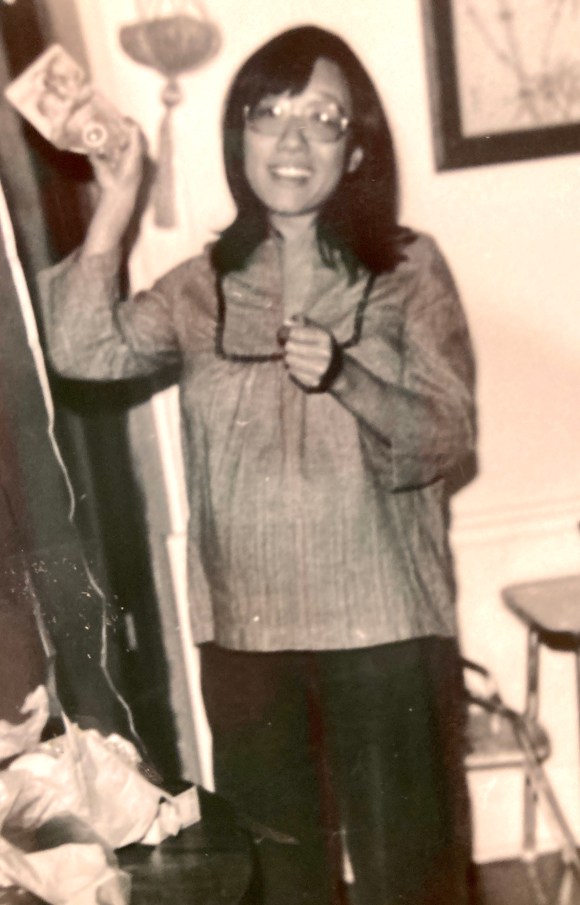
Some of my teachers were supportive. Some were hateful. You know who you are – Simon Horenstein! Your evaluation of my performance in neurology was a masterpiece of bad-mouthing coated in fancy language. I remember that you accused me of making “sotto voce” comments during your lectures.
My white coat gaped around my belly. Underneath, I wore big, tent-like dresses, the pregnancy clothes of those days. I eased away from the patient’s bedside during student rounds to run to the bathroom to throw up. My ankles swelled.
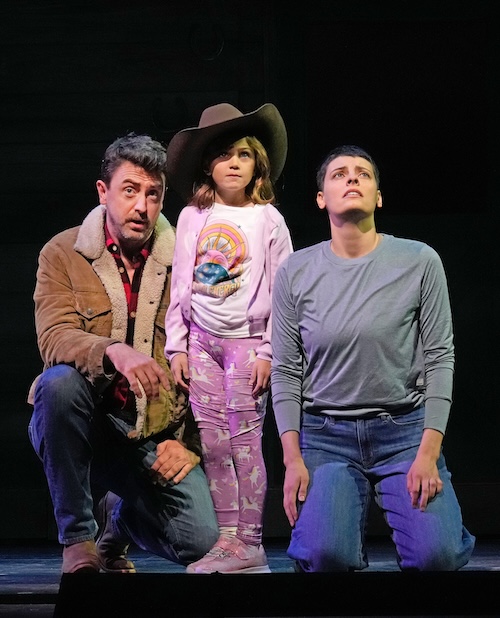
Jess had a little girl, Sam. I had a boy, Alex.
Five years later, Jess returns to flying. Six weeks after Alex’s birth, I was back on medical rotations. Both Jess and I felt torn between work and home. Most moms do. I related to Jess’s obsessiveness. She sings, “Even when I’m here, I’m there. Even when I’m there, I’m here.”
I remember being with Alex at a McDonald’s. Dismay crushed me when I heard my beeper go off. A patient or the hospital needed my immediate attention. Then I realized that it wasn’t my beeper. The McDonald’s French fries fryer timer emitted the exact same tone.

In Act Two, Jess is offered a spot to fly a drone missile called the Reaper from a trailer in Las Vegas. She scoffs, “The Chair Force!” Eric reminds Jess that she would be able to go home to her family every night. Her life would not be in danger from RPGs (rocket-propelled grenades) and tracer bullets.
The Las Vegas room consists of two gaming chairs in front of a huge electronic display of computer screens. The other chair belongs to a 19-year-old boy, recruited for his video gaming skills. His job is to work the cameras. The whole time, he noisily sucks soda from a huge cup. He introduces Jess to the Kill Chain, the people who choose and coordinate the targets. The highest up the chain is the Judge Advocate General (JAG).
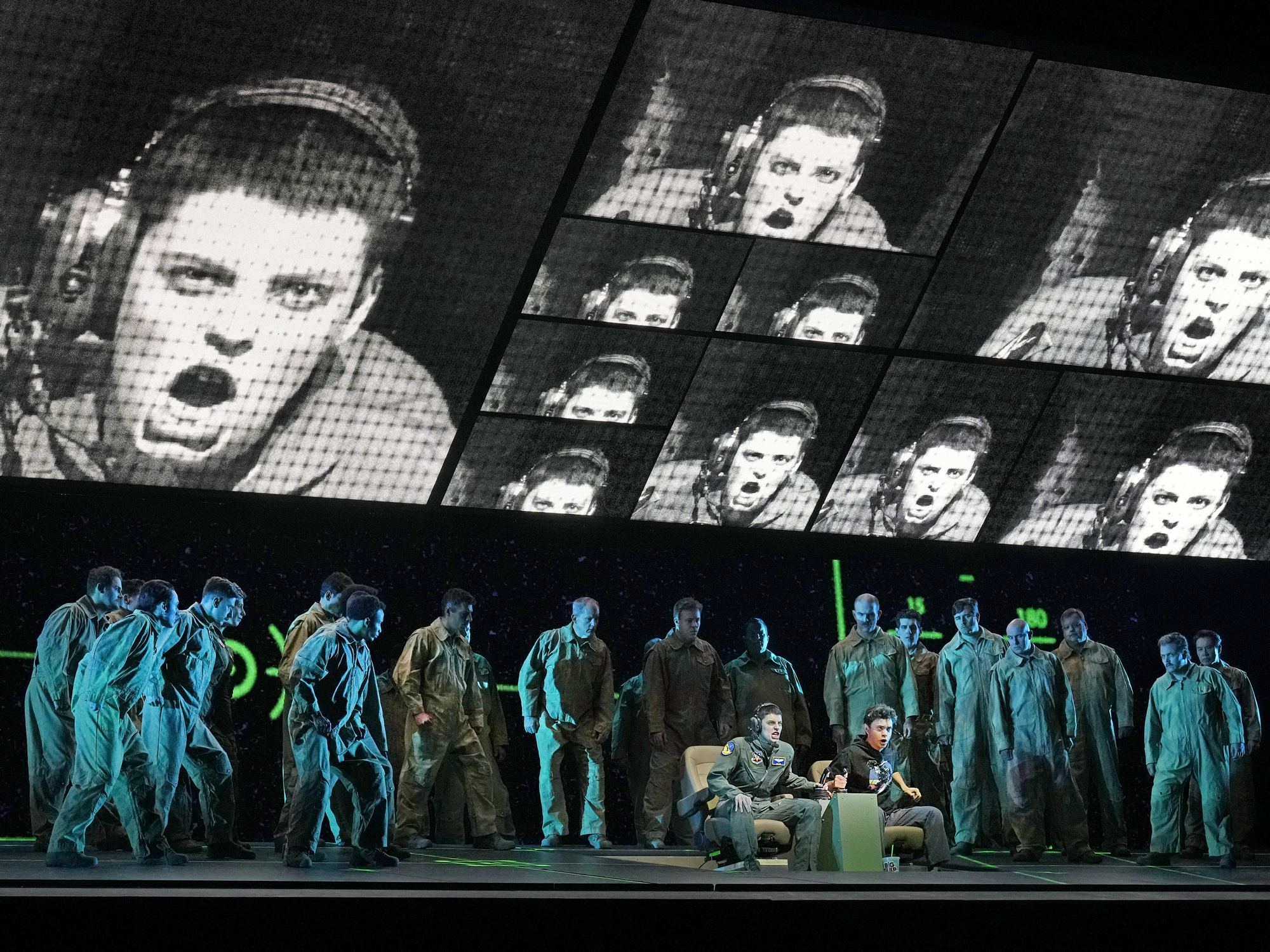
From the drone trailer, Jess gets a much closer look at the “enemy.” In her F-16, she only saw white puffs of dust when a target was taken out. Now, she can pinpoint whether the person below is a man, a woman or even a child. Whether the men are of “military age.” She can identify the model of the cars and trucks.
She sees that the Serpent, the man she is charged to kill, drives a sedan that “looks just like mine.” He has a daughter close to Sam’s age, who he protects by distancing from her. She comes to realize that “the enemy” and “the guilty” are people not unlike herself. The intellectual, emotional, and moral implications of her killing someone while sitting in an easy chair in Las Vegas undoes her.
As often happens, history catches up with fiction.
In the fall of 2025, when the United States government obliterated the first of the Caribbean fishing vessels that they labelled narco-boats, killing all onboard, I thought of Jess. At this point, over 180 people have been killed in missile strikes at sea. The legality of targeting civilians aside, I am worried and sad for the young men and women who are carrying out these missions. They are suffering tremendous psychological injury. They will be haunted for life.

My “Chair Force” equivalent was working for a health insurance company. Jess’s career trajectory was thrown off track by her pregnancy. I was laid off in a corporate merger which included a non-compete clause. I couldn’t practice medicine in the St. Louis area for three years. I was 53 years old. Too young to hang up my stethoscope.
Then, an insurance company offered me a part-time job doing Utilization Review. Insurance company nurses at local hospitals reviewed patients’ charts. The nurses followed certain criteria to determine if the patients needed ICU-level or hospital-level care, or might they be transferred to a lower, and therefore less costly, option. Some possibilities included inpatient rehab, skilled care, hospice or home.
The nurses needed a doctor’s approval to have the patient moved to a lower level. (Of course, the insurance company does not dictate medical decisions. They just decline to pay for the more expensive choice.) Often, the situations were not cut-and-dried. Patients sometimes were sicker than what their vital signs and lab numbers might indicate. Social issues complicated recovery: family support, finances, distance to care facilities, patient’s understanding of their illness, pain. To be fair, I had leeway to decide what was “medically necessary.”
Like Jess, I felt that my new job was a giant professional demotion. Personally, however, the upsides were huge. My hours were defined: no weekends, no nights, no phone calls at all hours. The pay was good. As a bonus, I liked the doctors and nurses I worked with. And because I covered all fields – surgery, neurology, orthopedics, in addition to my training in internal medicine – I learned quite a bit.
Still, I had my qualms. Deciding patients’ fates without getting my hands dirty seemed wrong. What was I contributing to anybody’s welfare? But, when my non-compete ended, I stayed with the insurance company.
Not long after I started at the insurance company, we had Russian physicians visiting from the newly dissolved Soviet Union. They came to learn how our medical system worked. Our company went all out. The president, my boss and his boss, and some nurse administrators showed the five visiting doctors around the building.
I seemed to be the only one who found the idea of exporting our dysfunctional capitalist medical model entirely ironic. Our system was – and continues to be – inefficient, costly, and often does not serve the patient’s best interest. We should teach this to others??
Tell me: Have you made career decisions that you’ve had second thoughts about?


8 replies on “The Easy Way Out”
So great to hear from you, Jane. I so admired how you handled your solo practice, dealing with staffing, payroll, and of course, patients. And how you found support — Balint and balance. Thanks for your kind words.
Cathy
LikeLike
I am sorry that I haven’t been keeping up with your blog, Cathy. I appreciate your insights and excellent writing. Knowing you all these years, I never knew that you, too, had an unplanned pregnancy at an inopportune time. I also understand why it has been difficult for you to write about your last job. I haven’t written much since my retirement, so I need to get back on the horse.
I am fortunate that fate (and pregnancy) actually brought my career around to exactly where I had planned to be all along. In fact, if I had finished out my medical residency, I would not have been as prepared to take over my retiring physician’s practice. I am a big believer in the ,’if one door closes, another door opens’ theory.
I enjoy expanding my experiences through your reading and theatre events. I especially delight in seeing your old photos!
Jane
LikeLiked by 1 person
So good to hear from you, Henry! The opera had mixed reviews, and to me, seemed to fall along gender lines. You are the exceptional guy!!!
LikeLike
Your description of “Grounded” made me realize I had seen it before–the stage play–several years ago. It was also called Grounded and was written by George Brant. Very powerful. But if you had asked me how likely it was to be made into an opera, I’d have said not a chance–it’s a one-woman dramatic monolog, and all the other characters appear only through her descriptions of them.
I wonder if the shocking ending is the same.
I haven’t seen much opera in my life, but I want to see this one.
LikeLiked by 1 person
Thank you, Mary Dee.
LikeLike
Cathy..you did it again ..made me understand and feel what I haven’t personally experienced. Thank you.
Mary Dee
LikeLiked by 1 person
Yes, you have, Nancy. ❤️
LikeLike
I was also taken wth the Opera! It’s message was strong.- in my various careers I have taken the journey of questioning the rules/ authority when issues have presented to compromise truth!
LikeLiked by 1 person