He was a slight young man with dirty-blond hair that hung to his shoulders. He wore the drab olive army coat that was favored by all young people, veterans and War protesters, male and female. I asked, “Why are you here today?”
It was the late 1970s. I was on a Psychiatry rotation at the Jefferson Barracks VA Medical Center in St. Louis. Outpatient Psych was considered an easy gig as there was no night call. Night call is medicalese for working through the night after working a regular day.
I had on the short white coat that pegged me as a medical student. A stethoscope snaked around my neck. My pockets bulged with tools like a reflex hammer, tuning fork, ophthalmoscope and otoscope, and the WashU Manual of Medical Therapeutics.
The young man, a Vietnam Vet, leaned toward me. “I just need your okay to get the VA to pay for my sex change surgery.” He brought out some papers and told me that he had fulfilled all requirements except for the Psych evaluation.
My head was spinning. What do I know from gender reassignment surgery? Zippo! I listened because that was all I knew to do. He was sincere and thoughtful. I was sympathetic. He wanted it so much. On the other hand, did I really have to power to let somebody get his dick chopped off?
This was my introduction to gender transitioning.
In the subsequent half century, I have had few encounters with trans people – that I know of.
*One of my patients in the ‘90s travelled to Canada for her reassignment surgery.
*A tall, somewhat burly person plays in my tennis clinic wearing a skirt, a flowery hat, and dangly earrings.
*I attended a seminar some years back about a trans woman’s journey, with input from her, her doctor, her therapist, and her wife who stayed in the marriage throughout.

My learning curve has been full of skips. I fear that, in my ignorance, I might offend folks who are closer to this issue. Nonetheless, I’m jumping in by recommending the book Woodworking by Emily St. James, published in 2025. St. James is a TV writer, podcaster, journalist and pop-culture critic. She is trans.
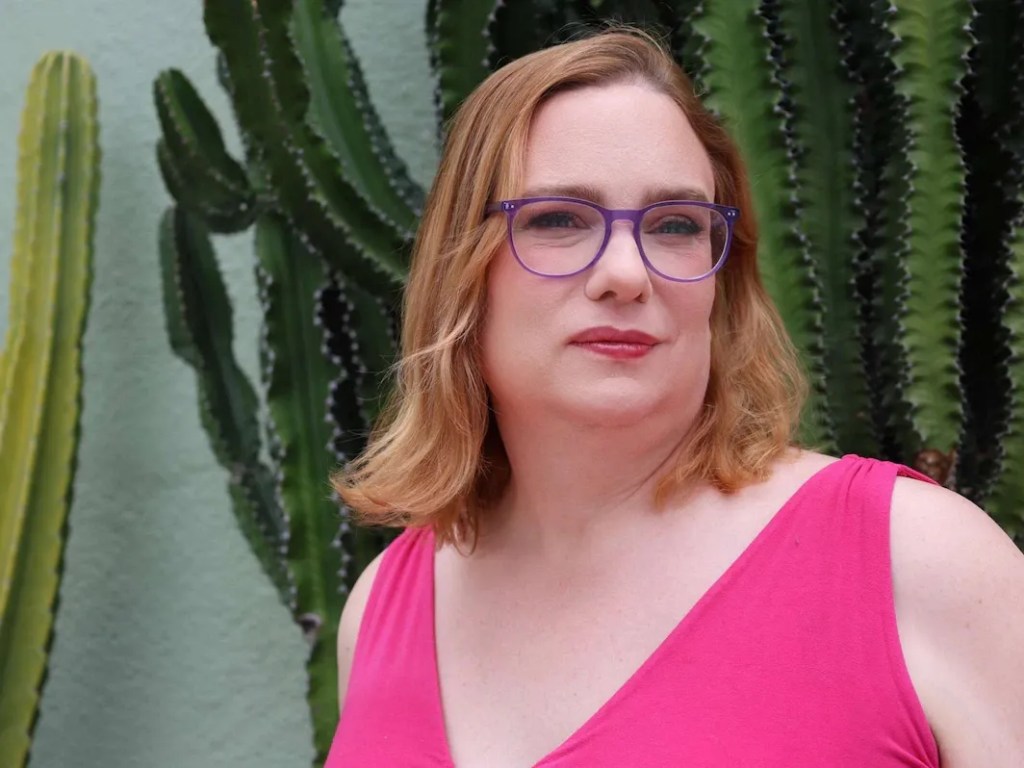
Woodworking’s main protagonist, Abigail Hawkes, is a high school senior. She’s the only trans student in her school in Mitchell, South Dakota. She is smart, funny, and big-hearted. She has the trash mouth, big moods, and angsty relationships typical of teens. She has a loving boyfriend, a supportive sister, and an unyielding mom who wants “her cute little guy back.”
Abigail gives a running commentary about her life. Here’s one such observation. “A couple of months before he threw me out, my dad took me fishing because his pastor said I ‘lacked positive role models.’ I think the idea is that I would hold a slowly suffocating fish and be like, ‘Okay! Manhood! I get it.’”
The other main character is Mr. Skyberg, Abigail’s English teacher. She identifies – to herself, initially – as Erica. She agonizes over the choice. She figures she’ll lose her job at the very least if she comes out. Her other option is to continue being Mr. Skyberg to the world. She’d be blending into the woodwork. Hence, the title, Woodworking.
Just as interesting to me is to see how the people around Abigail go from being curious to becoming friends, colleagues and lovers. They just got to like Abigail. It’s pretty simple.
The things that shock me represent a moving target. As a grade schooler in Catholic schools, I was horrified when I read that a movie star I admired was divorced! Later, homosexuality seemed bizarre and nothing to do with me. Now, gays and lesbians are our neighbors, friends, cousins.
I think that gender fluidity is much more widespread than I know right now. I suspect that transgender people will become as commonplace as, say, left-handed persons when they come out of the woodwork. I know that’s true. When I told friends I was reading this book, they talked about their trans children and grandchildren.
This book has made me alert to trans issues. A recent Lancet article is called “Transgender Ageing in Thailand.” The United States Tennis Association, an organization that I belong to, recently barred trans women from playing in women’s leagues even though we are rated by ability. Why would anyone’s biological gender matter when opponents of the same ability play each other?
The Missouri Supreme court just upheld Missouri’s ban on gender affirming care for minors. Missouri also disallows Medicaid payment for gender affirming care for all ages. The Supreme Court is deciding about sports for trans K-12 kids. Yes, even T-ball league kids.
I have not followed closely the lawsuits from parents who say that their children have lost out on scholarships and college opportunities to trans athletes. I just hope that this issue involving very elite athletes doesn’t freeze out the vast majority of trans kids who just want to play sports.
The deal is that, after reading Woodworking, I no longer ignore trans news and health articles as issues that don’t affect me. I care because I have a better sense of what the stakes are. I care because of fairness. I oppose the heartbreak that religious and political ideologs wreak. One thing I’m sure of: the government needs to stay out of how people choose to live.
We all succumb to a degree of woodworking. Who doesn’t want to fit into their community? As a medical student, I showed bravado being on call at the hospital every other night, even though I was exhausted. As a young attending physician, I laughed at the casually sexist and racist comments floating around the doctor’s lounge, even though I was in both target groups.
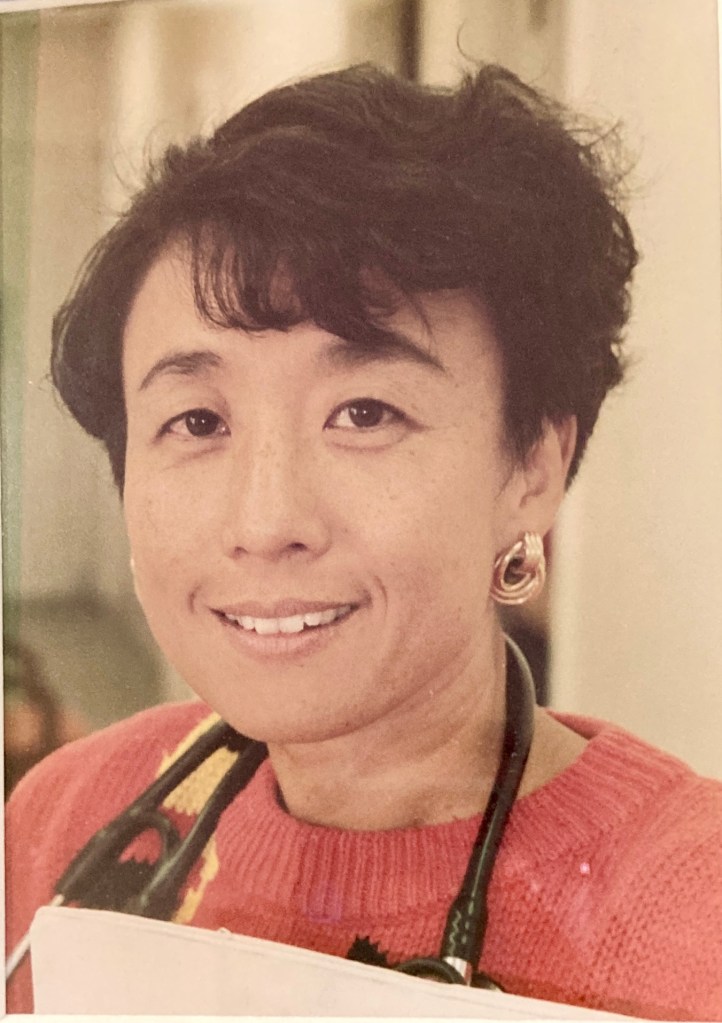
I want to say a word about pronouns. I’m surprised how dependent I am on them to peg people. I keep getting thrown when Mr. Skyberg, who identifies as Erica, is referred to as she throughout the book. It’s ironic, as my first language, Chinese, doesn’t even distinguish pronouns by gender. “He” and “she” are both ta.
The struggle of all the people in Woodworking, with a focus on trans individuals, is simply to live their most authentic lives possible. This, after all, is THE human enterprise. But this requires the important people in the trans person’s life to see them as they are. To be seen, to be known, is also a universal need.
My face felt hot. My eyes burned. I considered my choices. I could grant this young man’s most ardent desire. I could be crucified by my teachers. I surely didn’t know what constituted best medical practice in a case like this. In the end, fear won out. I told him he had to talk to someone who had a medical degree.

 Dr. Bookworm
3 replies on “I Am Cis. You Are Trans. So What?”
cathy..you did it again …increased my understanding and helped me to analyze my own thoughts. Thank you. I think you should send this to Tony Messenger at the PD and ask him to include it in his column..we all need to increase our understanding. Thank you.
LikeLike
Terry,
Thank you for your positive feedback. My goal is to be read by as many people as possible, so I am thrilled that you have shared this with others. Thanks again.
Btw Bill’s knee is rehabbing well. Yoga soon.
LikeLike
Cathy,
Your blog post is wonderful.
I’m a member of the group of people you know who say they have a grandchild who is trans. She also happens to be a survivor of childhood acute pre-lymphoblastic leukemia. She’s now a freshman at University of Illinois-Chicago where she is thriving. Just this week she was written up in the newsletter of Friend of Kids with Cancer.
Just before I read your blog I was in a Zoom class for a course I take at Clark Community College in Maryland, just outside Baltimore. It’s on The Best American Short Stories of 2025 edited by Celeste NG. We discussed “What Would I Do for You, What Would You Do for Me?” by Emma Binder and “Angelo” by Andrew Porter. These stories are about trans and gay people and the worlds they live in. And a few months ago I had another course where the anthology was A Century of Fiction in The New Yorker 1925-2025. One of our readings was “Brokeback Mountain” by Annie Proulx.
I took the liberty of sharing your blog with our professor. He liked it very much. He’s considering sharing it with members of the class. He also leads a group he created called The Literati Group of Columbia. There are about 85-90 members and he would like to share your blog with them as well. I hope that’s OK with you.
There is a growing number of members of the LGBTQ+ community around us. They are appearing more in our lives, our literature, and our culture. We will do well to recognize that and say, “so what?”
Please give my regards to Bill.
Best wishes,
Terry
LikeLiked by 1 person