“Fourth floor,” warbled the disembodied female voice in our hotel elevator in Edinburgh. She drew out “fourth” like it was two syllables, “FAAH-uth.” Our “Roads Scholar” tour guide Kevin, who is English, tilted his head and said, “That’s a rather posh voice.”
Can a voice be posh?
This was news to me. I always thought of posh as being interchangeable with luxurious: a posh car, posh digs, a posh restaurant.
In Great Britain, it is so much more. “Posh” in Great Britain indicates upper class. Their members speak in different tones, attend different schools, have access to clubs, the most exclusive one being the House of Lords. They have privileges and incomes beyond those of regular people. Then there’s the confusing swirl of titles: Lord and Lady, Earl and Countess, Duke, Prince, Viscount, Baron and their female counterparts.
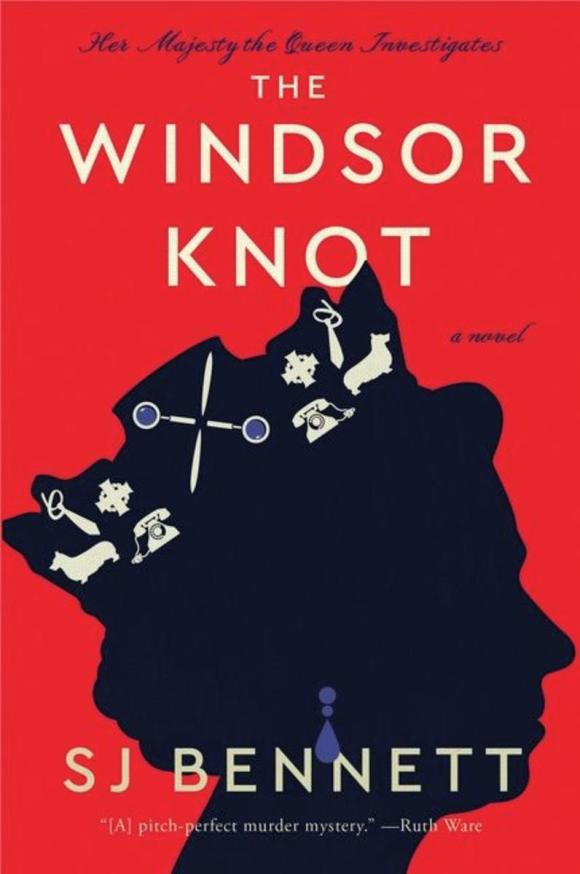
Well, you can’t get more posh than the Royals. So, it seems fitting to commemorate our trip to the British Isles by recommending The Windsor Knot by SJ Bennett. Published in 2021, The Windsor Knot is the first of a series of cozy mysteries in which a nonagenarian Queen Elizabeth solves crimes.
The Queen enlists the help of her Private Secretary’s assistant – a young, British Nigerian female army veteran named Rozie Oshodi. Together, they outpace the Met and MI5 in solving the murder of a Russian pianist invited to a “Dine and Sleep” at Windsor Castle.

The Queen is given an intelligent and wry interior life. Her Private Secretary explains the pathology report: “The hyoid bone was broken. That’s a bone in the neck, ma’am.” She responds that she knows about hyoid bones. “She’d read a lot of Dick Francis novels. Hyoid bones were breaking all the time. Never a good sign.”
When Prince Philip brings up the staff’s perception of her “fragile nerves,” she replies, “They forget. I’ve lived through a world war, that Ferguson girl, and you in the navy.”
Rozie is smart, resourceful and dedicated to her job. “The Royal Family always came first… that’s what you signed up for.” Besides being smart and steely, she is striking to look at: a tall black woman who manages to stride in four-inch heels and a pencil skirt.
You should listen to the audio version because the reader, Jane Copland, catches the cadences of the Queen.
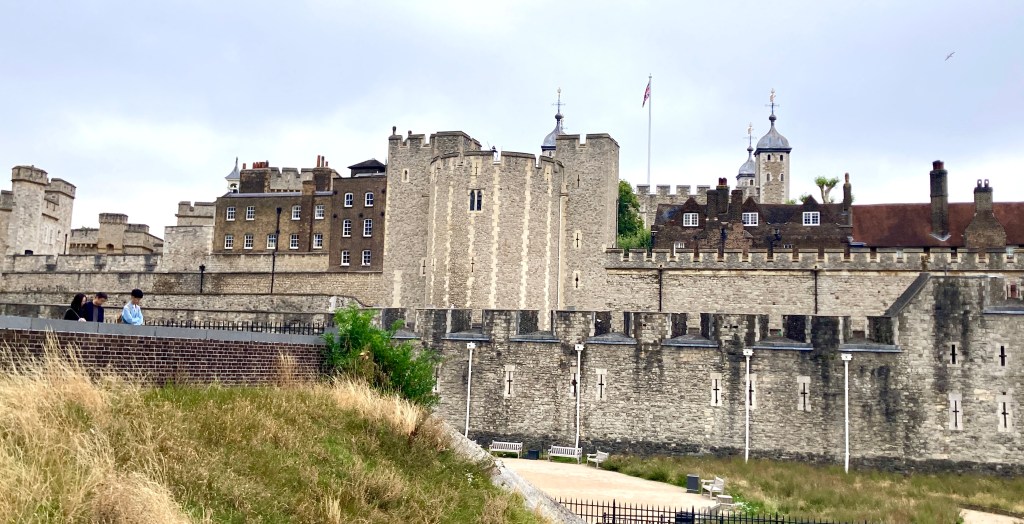
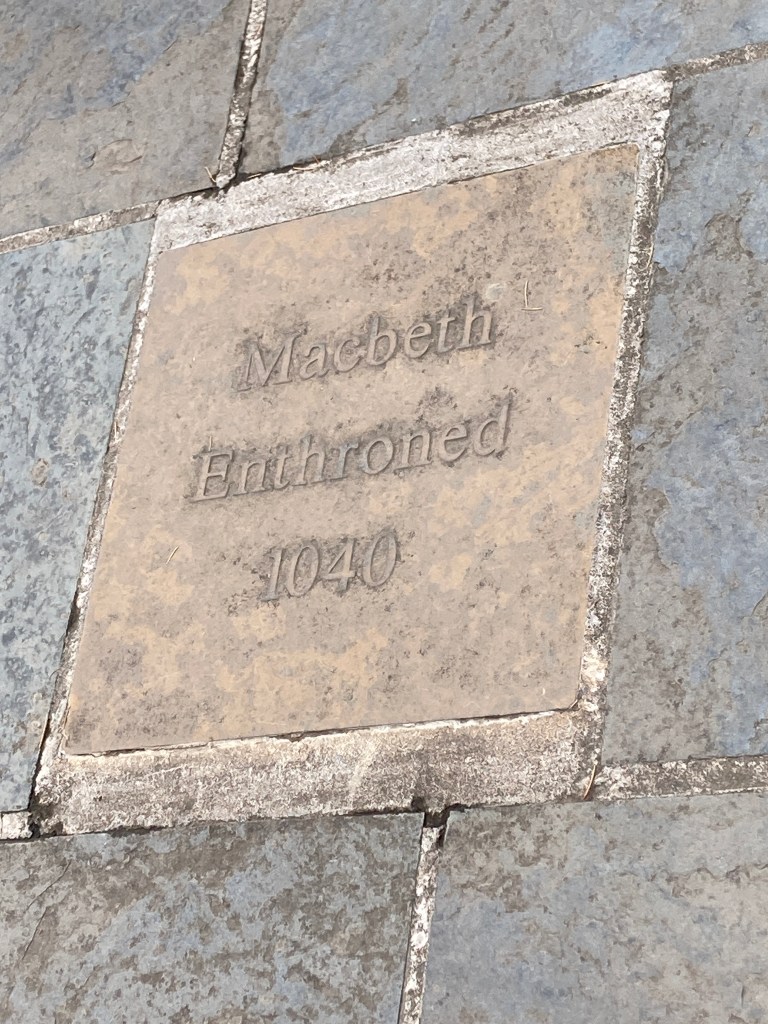
Our three-week tour of England, Wales, and Scotland was the culmination of my life-long love of things British. Well, at least those things that are depicted in literature, movies and TV. But being at physical sites that celebrate a grossly unjust class structure – the Tower of London, repository for the Crown Jewels; The National Portrait Gallery, full of kings, queens and ministers; the elite Oxford University; Scone (pronounced Skoon) Castle where Scottish kings were crowned – to name a few locations, gives me pause. I do not approve of this inflexible and undemocratic system.

So, why do I gravitate toward British books and TV shows? And especially those that feature the elite? Like everyone else, I followed the love lives of Downton Abbey’s Crawley sisters – Lady Mary, Lady Edith and Lady Sybil. I waited for Maggie Smith’s Dowager Countess’s witty quips and delighted in the rituals of the rich. Who knew the butler literally bangs on a dinner gong every night? And the outfits! The jewelry! The table settings!
But I started much earlier than Downton Abbey. As a kid, I watched The Adventures of Robin Hood with Richard Greene and sponsored by Brylcreem, “A little dab’ll do ya’” (The things you remember when you are young.) I thrilled to the Adventures of Sir Lancelot, another 1950s English TV series.
In college, I discovered the Golden Age mysteries by writers such as Agatha Christie, Dorothy Sayers, Margery Allingham, and Ngaio Marsh. I was especially fond of Sayers’s Lord Peter Wimsey and his wife, Harriet Vane.
Nowadays, Charles Finch’s books feature Charles Lennox as a gentleman detective. Charles Todd’s books dispatch Scotland Yard inspector Ian Rutledge all over Great Britain to troubleshoot criminal cases. Britbox has another iteration of Elizabeth George’s Inspector Lynley, the detective who’s also an earl. He goes by “Tommy,” the posh set’s affectation of using pet names.
Women, such as Jane Eyre, Elizabeth Bennet, Maisie Dobbs – whatever their own admirable abilities – as a rule, raise their station through marriage. Patriarchy, anyone?
So, why I do like these stories and love these characters?
As an Asian woman, I would never have a place in any of these scenarios. I would forever be an outsider … and below every Caucasian. As someone who lived in Hong Kong when it was still a British Crown Colony, and who has read The Jewel in the Crown by Paul Scott and The Quiet American by Graham Greene, I see through the ex-pats who would have been so lowly in their own country but can lord it over the brown people.
A part of me buys into the fantasy of living life without chores. Others labor at the laundry, the dishes, the cooking, the shopping. Someone else changes the diapers and puts the children to bed. Still others dust the knickknacks and polish the furniture. Not only that, but there are servants who will run errands, organize your wardrobe, and if necessary, help you hide a body.
In fact, I think it’s the relationship that the upper-class hero has with their staff that attracts me the most. The servants are not just employees; they are “in service.” They are devoted to anticipating and then fulfilling their employer’s – who am I kidding? – their master’s needs. They are confidantes. They are deputies. They are moral support. Who wouldn’t want to have that?
We’re talking Robin Hood and his Merry Men, Lord Peter Wimsey and his valet Bunter; Frodo and Sam; Charles Lennox and his butler Graham; Downton’s Carsons and Mrs. Hughes; and the Queen and Rozie.
In a way, the members of the upper class are like superheroes. They can access places and people that mere mortals cannot. We drove past several traditional Gentlemen’s Clubs while traversing London. Some of these exclusive, male-only, social clubs are over two hundred years old. You must be a member to use the amenities: bar, library, dining room, and guest rooms. Only members can propose membership for others. The old posh boys’ network.
Still, when the posh people use their privilege on the side of the little guy, it warms your heart – something Hugh Bonneville’s Lord Grantham excelled in.
Don’t get me wrong. I see America’s societal divisions – by race and gender, and also by income, education, occupation, geography, religion and politics. But at least we aspire to be a society of equals. We go through the motions that members of our society have equal standing: no titles, no curtsying, no privileges, no House-of-Lords hereditary Parliamentary seats, political dynasties notwithstanding.
Sometimes I wonder when the British people are going to wake up to the arbitrary nature of their class distinctions. When will Brits have the same cringe reaction to seeing men, cloth hats in hand, bowing and scraping to a “noble” that we get when watching Black subservience in “Gone with the Wind?”
Not for a long time, methinks. Too much of British history and identity, social cohesion, and a huge chunk of their economy (so many tourists attractions and their obligatory gift shops are castles and cathedrals) depend on celebrating these distinctions.
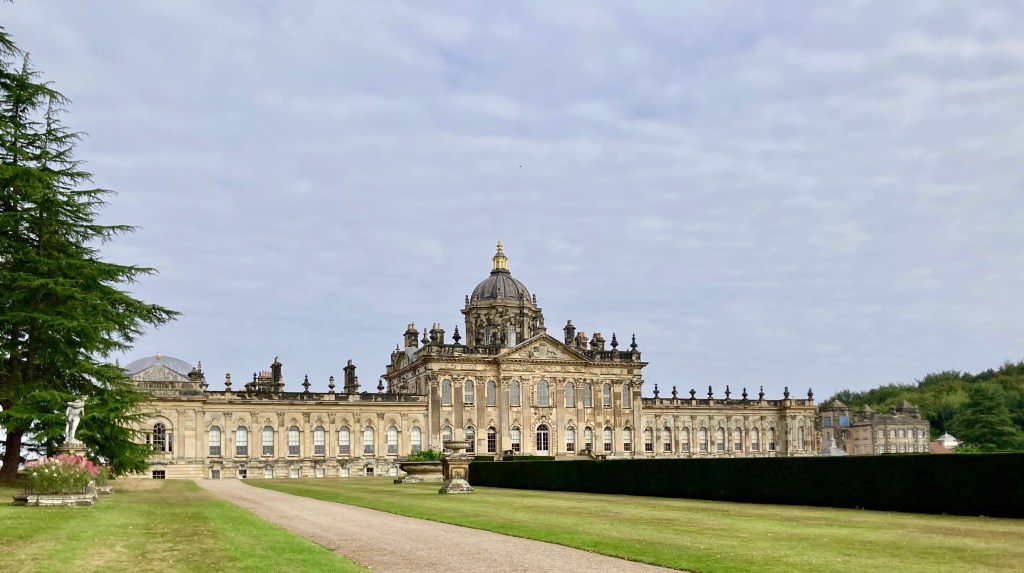

On reflection, my tour of Great Britain was the exciting chance to see the places I’ve read about and seen in movies and on TV – Trafalgar Square and Piccadilly Circus, Tower Bridge and Waterloo Bridge, Westminster Abbey and St. Paul’s Cathedral, the Oxford skyline, the Royal Crescent in Bath, the Yorkshire moors.
It was also a gentle reminder that Britain is a real society, not just stuff I read in books. From my brief interactions with locals, most notably cabdrivers and our four tour leaders – I never encountered anyone posh – the economy, immigration, race, and the uneasy union between England, Wales and Scotland, seem top of mind. People were resigned about Brexit. They weren’t paying attention to Trump. The class system seemed so ingrained that few saw it as a problem.
Except I did. I will never quite enjoy those carefree days of being served tea by the starch-hatted maid or walking down a wooded path with a top-hatted beau. (Think Colin Firth!) I will always feel a pang of regret and class rage.
Bill and I wanted to see the land and people who live in our heads through books, TV and movies. We had two choices: the “Roads Scholar” trip with adequate-plus accommodations. Or a more expensive Tauck excursion. I tried to tempt Bill with the Tauck, saying, we get to spend three nights at the Savoy! The decisive factor for Bill was a fear that the people on the Tauck trip might be too snooty. Dare I say posh?
Tell me: How do your class (and/or gender) resentments manifest?

 Dr. Bookworm
2 replies on “Against Posh?”
“But at least we aspire to be a society of equals. We go through the motions that members of our society have equal standing: no titles, no curtsying, no privileges, no House-of-Lords hereditary Parliamentary seats, political dynasties notwithstanding.”
Not sure this is true anymore. It seems American society has settled into layers, the top one quite thin. And yet, those in that very, very thin “upper crust” seem to aspire to ever greater levels of wealth and immunity from the concerns of the rest of American society. We are, sadly, separating into various class levels like a bottle of un-homogenized milk.
LikeLike
as always Cathy I love reading and learning from your written word. Thank you for sharing and Please keep doing so.
LikeLiked by 1 person