Wildfires! Floods! Hurricanes! Heat waves! Droughts! And each catastrophe a record-breaker!


Weather news these days sends me into a tailspin of despair and anxiety. And guilt. What is my duty? Do I have to give up air-conditioning to keep the planet from self-destructing? Would I?

Reading science journalist Madeline Ostrander’s 2022 book At Home on an Unruly Planet: Finding Refuge on a Changed Earth has given me, peace of mind goes too far, but some understanding of the fight. This slim, powerful book has helped me interpret the torrent of climate news. The news may be horrible, but I’ve lost the urge to block up my ears and go “La la la, I can’t hear you,” a feeling I’ve had since seeing An Inconvenient Truth.
Ostrander explains how worsening disasters, such as wildfires in the West, including Lahaina, hurricanes along the East Coast and the Gulf, and flash flooding in the Midwest are all part of the same “climate change” story.
My hometown St. Louis had two five-hundred-year floods in 2023!
Of course, climate disasters are not limited to the U.S. This year alone, we’ve seen massive Canadian wildfires, protracted heat waves in India and China; devastating floods in Pakistan and Morocco; and famine-causing droughts in Africa. All are exacerbated by global warming.
In a nutshell, higher global temperatures due to increased atmospheric carbon dioxide from burning fossil fuels, propel almost all of our world’s more violent weather.
But instead of my hand-wringing, there are everyday people who, forced by circumstance, are working toward creative solutions. Ostrander shares some of their stories.
One example is the native Alaskan village of Newtok. For generations, the village sat on frozen ground next to a river. As the permafrost melted and the river flow grew in intensity, the ground gave way. Houses toppled into the river. The 400 Yup’ik villagers, who the New York Times called “the first climate refugees in the U.S.,” had to relocate their entire village eight miles away.
Ostrander describes the physical challenges of erecting a village from scratch in a place without roads or even trees. Materials came in by air, boat or snowmobile.
Weather permitting.
The emotional toll of the relocation was high – political infighting, societal and familial discord, financial hardship.
Ostrander then takes us to Florida where we see more powerful hurricanes and rising sea levels. She interviews two building preservationists. These women, whose jobs include restoration of damaged buildings, had to move their homes because each was flooded out!
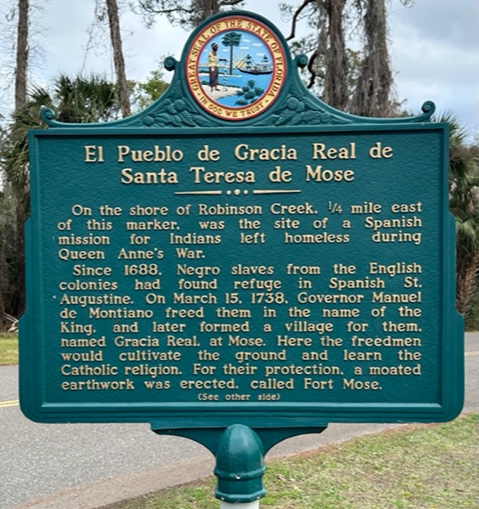
In their professional capacity, they project climate change causing buildings, neighborhoods, indeed, whole cities to become unlivable. They see history being destroyed: 17th century structures in Saint Augustine, the historic Annapolis waterfront, even New York City (Hurricane Sandy was a foretaste). Fort Mose, the first free Black settlement in Florida before the Spanish ceded the territory to Britain in 1763, is a park near St. Augustine, Florida, that is now under water. As the sign reads, “ …1/4 mile east of this marker, was the site …”

I notice that Florida real estate developers have not caught on to the dire consequences of sea-level rise. Every New York Times Magazine contains full-page ads for soon-to-be-built residential high rises on the beach! Really?
Ostrander quotes one of the preservationists who stated that she has enjoyed her work saving statues and archaeological sites. But, she adds, “I hate to think that everything that I have done for the last forty years is now going to be gone because sea level rise has not been addressed.”
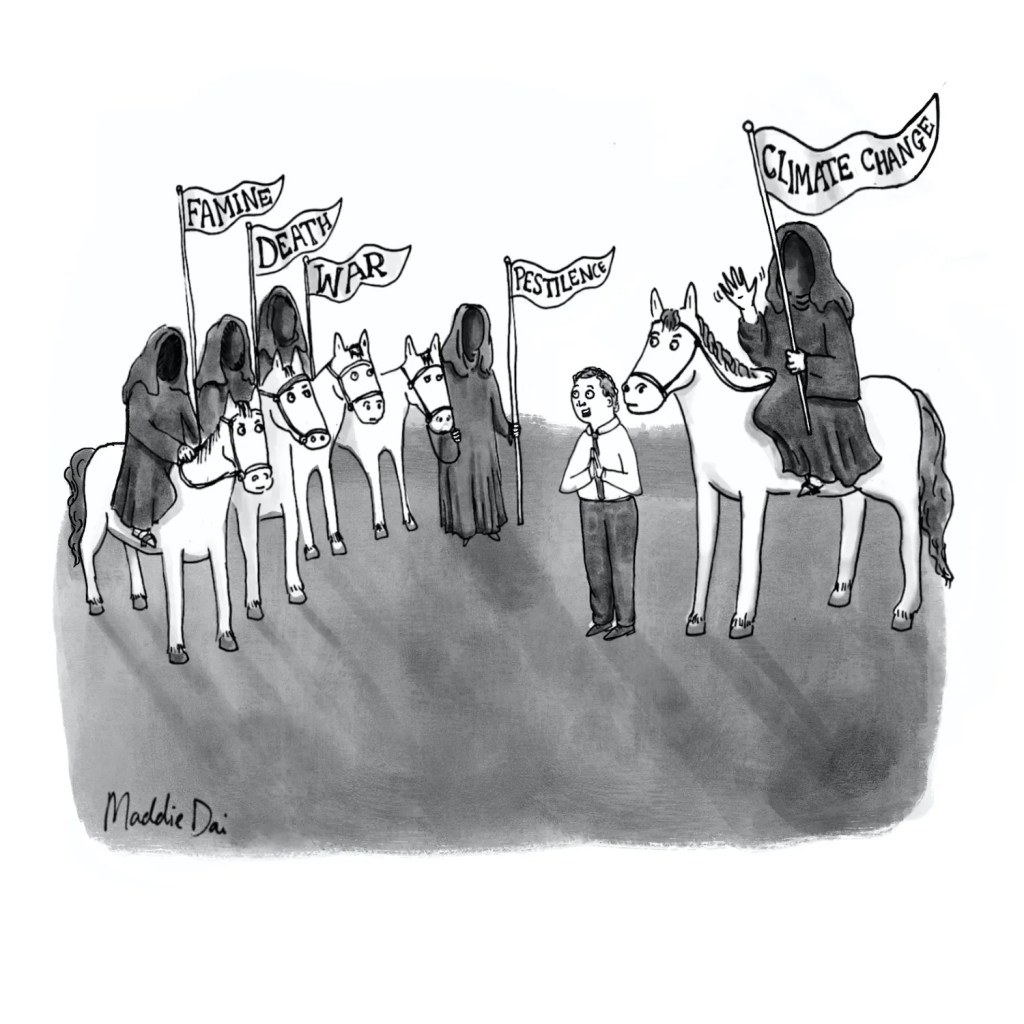
Here’s why rising sea-levels and storms will continue. Ocean water expands with sea temperature rise. Polar ice melt also adds to the volume. Warmer atmospheric temperatures, which can hold more moisture, lead to heavier rains. As long as the carbon in the atmosphere keeps increasing and raising global temperatures, the sea-rise and storms will not just continue. They will intensify.
For me, it’s a comfort to know that smart and dedicated people are doing practical things to mitigate the effects of flooding up and down the Atlantic and Gulf Coasts. Plans differ: barriers, storm sewer management, channel flood waters, raising buildings. The umbrella term is “resiliency planning.”
But of course, controlling carbon emissions could avert all these issues all at once. As a physician, I see that addressing climate change effectively is like preventing diabetes. The second-best option is to treat all the complications of diabetes: heart disease, stroke, cataracts, retinopathy, neuropathy, and kidney failure.
In the Western United States, Ostrander follows the lives of three residents in Washington State: a forest ecologist, a firefighter and a fire scientist.
Why is “fire season” longer and more intense?
Why the heatwaves and droughts?
The answers are the same: higher temperatures. The soil and vegetation dry out, causing tinder conditions. Once the fire is raging, the heat of the fire itself causes more violent winds which whips up the inferno.
Ostrander describes the harrowing conditions: fires you thought were controlled jumping their boundaries fires; small fires blazing and coalescing into megafires; losing touch with loved ones in the fire zone; your house and possessions going up in smoke.

The American West always had fires A study of past practices of Native Americans and a statistical chart of fire behavior show that. “People need to accept the fact that no fire is not an option,” the fire scientist said. The areas that did best were ones that had controlled or prescribed burns to deprive fuel for megafires.
Ostrander also reminds us that the basis of climate problems, the fossil fuel industry, has always been dangerous, polluting, and unhealthy – especially for people who can’t afford to move far from processing plants. These are called frontline communities.
Richmond, California, is such a community. In this town not far San Francisco, a Standard Oil refinery was established in 1902. The area near the Richmond refinery was nicknamed the “black Crescent.” A teenager from Richmond put it more succinctly, “This is like the freaking pits of Mordor.”
Over the past century, people have has experienced explosions, chemical spills, contamination of the soil, unbreathable air, and forced relocation.

Ostrander spotlights residents who are working to clean up the contaminated ground, to grow vegetables, create greenways for local recreation, and make the area more self-sustaining. Some want to close down the plant.
Ostrander dives deeply into these happenings. She circles back to interview locals, sometimes over years, to check on changing conditions and whether their plans are panning out. In between the long story arcs are succinct explanations of the science. She intertwines scientific and historical information about those places with stories of how people there are coping and what they have learned.
The locals Ostrander talks to are scientists, activists, preservationists (be it of forests or historic buildings), and community leaders. That most, but not all, of the people she introduces to us are women is, somehow, especially meaningful to me. Interweaving their personal lives during these calamities with their professional assessments and efforts is a wonderful way to talk about the microcosm and the big picture.
Make no mistake. Things are not going to get better if we do nothing. And we’re not even doing that. Last year was the hottest year on record. With every degree of global temperature rise, hurricanes, fires, storms, floods will increase in intensity and frequency.

As Washington State firefighter Carlene Anders says, “And it’s going to get worse. There’s no way it’s not going to get worse. So we better be prepared, better do as much as we can while we can.”
Postscript: It is no accident that Madeleine Ostrander calls her book At Home on an Unruly Planet. She also addresses the concept of “home” to people around the globe. In my next blog, I will talk about how climate change has impacted our St. Louis neighborhood, and what Bill and I and our neighbors are doing in response. No, I’m not giving up the air-conditioning. But I will eat less meat. It’s all connected.
Tell me: What do you feel when you hear “climate change?”


4 replies on “Overcoming that “La La La, I Don’t Want to Hear About It” Feeling About Climate Change”
[…] I discussed Madeleine Ostrander’s 2023 book At Home on an Unruly Planet. She explains the large-scale environmental and human repercussions of climate change: fires and droughts in the West; hurricanes and ocean rise on the East and Gulf Coast; and melting […]
LikeLike
thank you Cathy for once again presenting a good book and responding to an ever growing fear and quandary..climate change and our role.
LikeLiked by 1 person
Thanks for your comments, Barry. It’s definitely a new normal.
LikeLike
Thanks Dr. Bookworm for this review. I’ll look forward to what you and Bill and your neighbors are doing. I read an article recently that used the term “ecocide.” Pretty stark language.
LikeLiked by 1 person