What Matisse and Cézanne taught me
about color, pattern and creating order
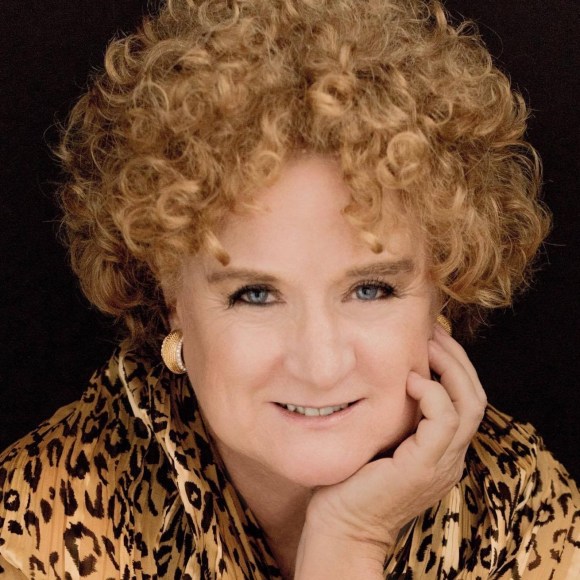
This is Susan Caba’s fourth blogpost for Dr. Bookworm. Her others are “where you headed from here,” “i sleep with other people’s dogs,” and “The Bear on the Stairs: Tales of the Prairie, with Paintings.”
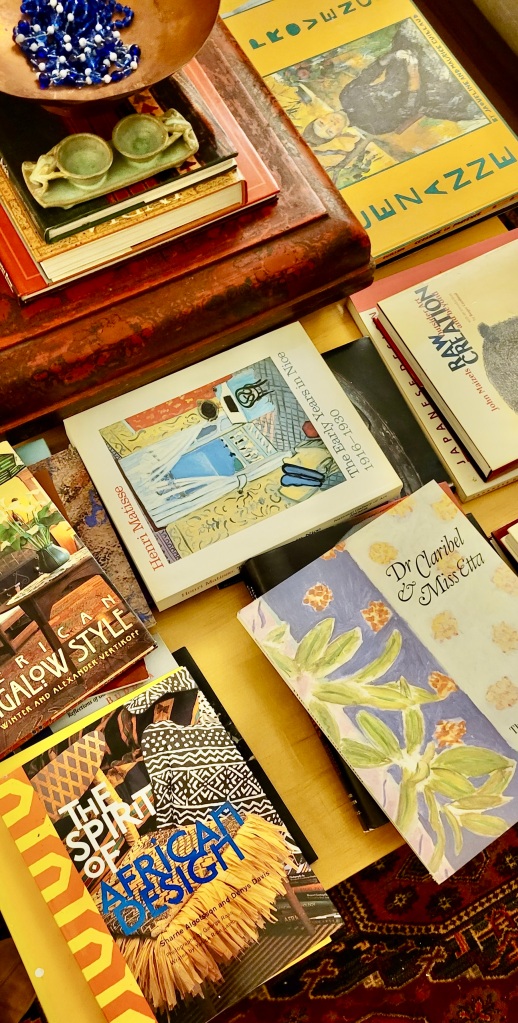
Glossy, glamorous and lush with photos and generally sparse on words, they’re called coffee table books.The term is vaguely pejorative. It’s as though these gorgeous tomes are akin to runway models, meant to be appreciated for their surface beauty and not expected to reveal much intellectual depth. If anything, people riffle through the pages and then return to cocktail conversation.
But I disagree with this characterization of coffee table books — or at least my coffee table books — as eye candy. I was recently reunited with some two or three dozen of my coffee table books on the topics of art and design. The experience was a memory stroll through the last four decades of my life, not only as I educated myself on art but also the stages of my career and my personal history.
Books are the markers of my life, even if I’ve read them once and haven’t opened them for decades. I have a box of well-thumbed travel guides, some even dating to the $5 A Day genre, that serve as postcards of my travels: Greece, Italy, India, Antarctica. The same is true of my art and design coffee table books.
One of the first I bought — and one I’m thinking of donating to Goodwill (though I’m reconsidering, now that I’m looking at it again) — was The Barn, A Vanishing Landmark in North America, by Eric Arthur and Dudley Whitney. It was 1972 and I was enrolled in Drake University’s School of Journalism in Des Moines, Iowa. Even now, I flip through the pages and remember Professor Bob Woodward, who encouraged his students to explore local topics. There is a typed (!), never-published draft of my article on barn-raising, folded inside the book.

“It might be hard to believe that many of the big old horse barns across the state — those huge halls built to hold a herd and a pile of hay — were built in a day,” I wrote. Woodward wanted me to write a book, Barns of Iowa, (which I didn’t). For years, I photographed barn beauties, round, hip-roofed, red barns or barns weathered a gray akin to worn denim. Nope, I can’t give away that book.
After graduation, my interest in barns faded, though I can still tell a gambrel roof from a gable roof. I went to work for a small daily newspaper in southern Iowa, then for the Iowa Farm Bureau in Des Moines. Iowa is no great center of the art world, but I was learning — little by little — to appreciate art, and evaluate it on a deeper level than just pretty or not pretty. I was an avid reader of the New York Times’ Arts page on Thursdays.
One of the easiest artists for a novice, like me, to appreciate is Matisse. Somehow, in 1986, I got myself to Washington, D.C. for the National Galleries exhibition, Henri Matisse: The Early Years in Nice 1916-1930. I loved Matisse’s paintings of the French Riviera, and I bought the catalog. I also invested in Jazz, a portfolio of the paper cutouts he created in the last years of his life.

Matisse’s paintings in the Nice years were dreamy portraits of interiors on the Riviera; still lifes of fruit, flowers and patterned walls, and lounging odalisques in striped pajamas. I didn’t think much about how he created cool, serene settings despite the unlikely mix of patterns and colors that flowed from his brushes. At the time, I would never attempt combining patterns in decor (I don’t paint), believing that two or more patterns in a room — especially in “conflicting” colors — would result in chaos.
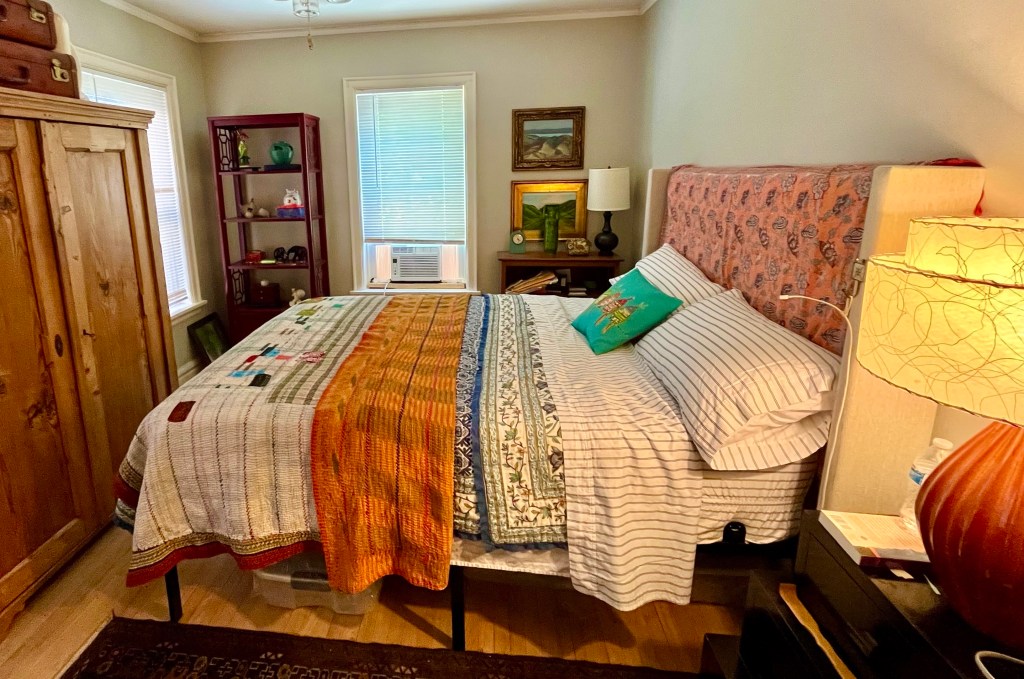
Somehow, as I’ve gotten older, I’ve become bolder in my embrace of what I previously would have considered “clashing” patterns and colors. My acceptance reached an apex on a recent visit to Jaipur, India, where I happened into a haveli (a boutique family-run hotel) in which the public rooms were a riot of color and pattern. I returned home to a new apartment that is anything but bland. A friend pointed out that my bedroom is alive with contrasting fabrics, many from India.
Matisse, on the other hand, pared his art to a minimum as he suffered from cancer in old age and was confined to bed. He composed cut-out collages from paper painted in vivid, highly saturated primary colors, on the themes of the circus and the theater. The resulting book, Jazz, was first published in 1947. We all change over time, depending on our circumstances. Matisse, despite the limitations imposed by his health, remained productive and creative.

A framed Buddhist mandala hangs in a corner of my dining room, a circle within a square within a circle in mostly green and red. When I look closely at the geometric patterns, I see this mandala represents the circle and cycles of life. And after all, isn’t that the soul of great art?
The other iconic artist represented on my coffee table is Cézanne. Frankly, I just didn’t get this artist. I saw in his paintings what I thought was an incongruent angularity, geometric constructions that didn’t make sense.
Until my then-husband and I visited Provence. We spent Sunday afternoons in the plazas of small villages. Suddenly I felt the urge to get a pencil and pad and draw. I looked at the trees and the fountains in those plazas and understood Cézanne’s geometric compositions. Cézanne in Provence, by Jaqueline and Maurice Guillaud, is a slim portfolio of his watercolors and studies for larger paintings.

Something about the slanting light in those villages cast the buildings and landscapes into forms that were simultaneously three-dimensional and flat. It occurred to me that Cézanne wasn’t imposing a style on what he saw (although of course he was). He was painting what was right in front of him. I sometimes catch myself looking at my surroundings and imagining them in terms of geometry. Cézanne’s other influence on me is the way I see colors. Leaves, for example, aren’t just green — a single leaf may contain a dozen shades, ranging from sage to neon, depending on the light.

The work of lesser-known artists and more obscure art movements are represented on my coffee table. I moved from Des Moines to Philadelphia and was exposed, through assignments covering museum exhibits, to the work of native Alaskans (Raven’s Journey, The World of Alaska’s Native People), the traditions of Chinese scholars (Treasures of the Chinese Scholar), and the little-known paintings of mid-century African-American artists (The Parkway Collections of Important 20th Century African-American Works of Art).
As I unpacked these glossy publications — and put them all on the coffee table — I could trace my evolution from appreciation of the Impressionists (and who can’t appreciate the Impressionists and post-Impressionists?) to an affinity with a wider range of art and artists. Seeing and learning about art has become one of the organizing principles of my life, especially when I travel. Like a bird watcher who seeks out the local birding opportunities in every location, I make an effort to visit art galleries, museums and artists’ studios wherever I go.

I spent a long afternoon in San Francisco years ago, fantasizing about buying an Andy Warhol print — preferably a Marilyn Monroe, a Jackie Kennedy or a Mao Zedong. Not that I could afford a print, but I studied up on his style and history and bought a book (Andy Warhol Prints, A Catalogue Raisonne, 1962-1987). I became enthralled with mid-century American plein-air painting and have several books on the topic (California 1930s and 1940s, American Scene Painting). I visited galleries in Kolkata, India and saw works by Jamini Roy and Rabindranath Tagore — and I bought a book.
I look at art differently now. I study the artist’s perspective. I notice how light creates the illusion of depth — or the lack of it. I’ve talked to artists about the experiences that prompted a certain style, or what artistic experiment they were conducting with a particular painting, in terms of technique or subject matter.
More importantly, I look at my environment differently. Sometimes I look at what’s in front of me in terms of composition (I once noted that the layout of a courtroom in Philadelphia resembled the composition of Da Vinci’s The Last Supper). I notice when the art and furnishings in a room echo one another in color, shape or pattern.
To my surprise, I’ve developed a “good eye” for art. I have no Warhols, Matisses or works by Cézanne. But over the years, informed by the concepts and principles I learned by opening my eyes to the works of fine artists, I’ve acquired paintings that are, in their own ways, great. For me, the surprise is that my art appreciation and knowledge grew gradually, seemingly without much effort on my part. A friend once said I have the attention span of a gnat, which makes it difficult for me to grasp the idea of incremental learning. And yet, here I am.
Art is a way of imposing order on the world. I am no artist, but I find it increasingly important that my surroundings express a vision of myself that I can’t really articulate in words. As my appreciation of painting has deepened, so has my ability to create that vision of myself — a sense of order — through my environment.
While some say the pleasure in a purchase diminishes fairly quickly over time, I continue to appreciate the visual details I’ve created throughout my home — the flow of sunlight through cobalt blue vases on the kitchen window sill; the play of patterns and colors of the quilts on my sofa, set off by the tiger-striped throw pillows. The colors of a painting of a French hotel on a wall are echoed in similar colors of an African mask hung above the painting.

And those coffee table books? Arranged in short stacks that cover the low table in a kinetic melange of color and pattern, they put me in mind of a Mondrian painting… or a psychedelic Sixties print … or the painted skyline of a city. Art is everywhere, when you stop to see it.

 Dr. Bookworm
3 replies on “Lessons from my Coffee Table Books”
Thank you, Cathy, for sharing your perspective on art appreciation. I am still trying to understand and appreciate Joan Miro’s work. We went to his museum in Barcelona.
LikeLiked by 1 person
Susan’s essay seems a beautifully crafted work of art in her words and ideas. Loved reading it!
LikeLiked by 1 person
Delightful essay! Thank you!
LikeLiked by 1 person